 Lost Tribes Institute
Oral Histories Intersecting to Build a Picture of Ancient Israelites throughout Asia
· Margot Crossing, Founder, Lost Tribes Institute
Written for the 1st Scientific Symposium on the Interconnectedness of Ancient Israelites in Asia, Aizawl, Mizoram, India, November 23, 2023. Particularly Lost Book memories, cave-dwelling memories and Israelite customs.
Also available as a PDF.
Introduction
In the West, stories persisted of the Ten Tribes of Israel (often misnamed Jews) living on the other side of the Sambatyon River, a mythical river that has no water but instead flows with sand and rocks. Some stories had a strong prince of these Ten Tribes, all living among a people with "no noses." The river could be the Taklamakan Desert, whose name, Jewish researcher Dr. Avigdor Shachan says, can be read in Hebrew as Tachlim-Kan, "You will be destroyed here."1 The people with "no noses"2 bring to mind the flatter faces of the Han Chinese.
In 1860, Dr. McGowan read a paper before the British Association stating that he had found evidence "of a numerous colony of Jews, in the city of Chengdu" about a century before Christ.3 Torrance adds that it had long been supposed that "Jews"4 had made their way to China several centuries before Christ.
Contemporary researchers have found evidence of large populations of Israelites in China. Esther Chen, in her paper The Hidden Qiang: "Sons of Sheep," and Prof. Howard Ha-Sung Chung, in his paper "Israelites in China" and his book Dispersion of the Israelites in the Eurasian Continent, both say that long ago Israelites were part of the historical record of migrations and settlements in early China, East Asia and the Silk Road. While the larger populations have lost any memory of their Hebrew past, a smaller group gathered in the hills west of Chengdu still carried some memories. According to Torrance, this community still existed in 1937 and kept the traditions, chants and customs of their Israelite ancestors. He wrote many articles and a book about these people, whom he called the Ch'iang Min or Q'iang Min, living west of Chengdu in the high hills along the Min River valley.
Other presenters at this first Scientific Symposium will focus on their own areas of expertise: the Hata tribal migrations into Japan and the many biblical traditions inside the Shinto religion; the Manchu dynasty of China and its possible links to the tribe of Manasseh through the Yuezhi royal family;5 and the Manas Epic of Kyrgyzstan, in which Richard Hewitt has found over three hundred parallels to biblical stories.
In this paper I focus on the hill-tribe peoples of southwestern China, northern Myanmar and northeast India: their Israelite-like customs, chants and traditions; their connecting "Lost Book" legends; and, for the Lushai tribes, the cave-dwelling legend that connects them to Xinlong in China, west of Chengdu. I also explore the Lushai ancestral name Manasi, a parallel story of a "big wall" in the Kyrgyz Manas Epic, and some linguistic similarities.
Israelite customs and traditions
In his book The Tribes of Israel, Rabbi Eliyahu Avichail documents the migrations of the Ten Tribes of Israel after they were taken to Media. He expected them to have Israelite customs. It was at his prompting that Mizo researcher Zaithanchhungi later did her own research, which changed her mind and convinced her that the Mizo are descendants of the tribe of Manasseh. Her book is reviewed at this Scientific Symposium.
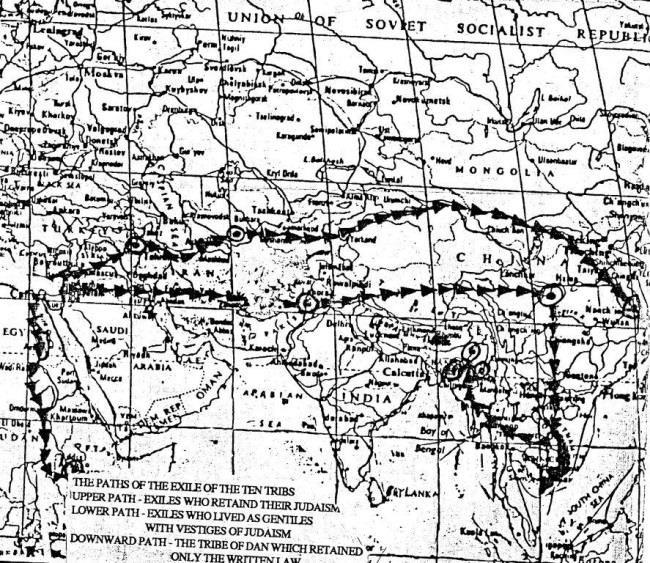
Figure 1. Amishav map by Rabbi Avichail. The lower route eastward is the Ten Tribes, who kept Israelite customs.
The Jews are not the Ten Tribes of Israel
To understand the core of this Scientific Symposium, we must see that "Jews," "Judaism" and "modern Israel" are distinct and separate from the dispersal of the Ten Tribes of Israel 2,763 years ago (around 740–721 BC). To conflate the two is to miss an important key to understanding biblical history and prophecy.6 In the map above, Rabbi Eliyahu Avichail7 tracks the Ten Tribes of Israel along the lower eastward route. He doesn't expect them to be Jews or to follow Judaism, but he says they will have Israelite customs and traditions. The Ten Tribes of Israel, also known as the House of Israel or the northern kingdom, went into captivity while they were acknowledging other gods and worshipping in groves on hilltops. Rabbinic Judaism was not formulated until about AD 100, some 800 years later, at Yavneh in Judea. So we should not expect to find Rabbinic Judaism among them, except where rabbis introduced it.
This Scientific Symposium will not focus on biblical prophecy (except in passing) but on evidence for the historical dispersion and later migrations of the Ten Tribes of Israel, and on some of the places they live today. While this subject has attracted much fantasy, we hope this symposium will be the start of something substantial, as evidence from many places in Asia comes together to show a picture of connected folklore, ancestral traditions, and a shared way of thinking, looking and living that matches other national stories.
The Karen of northeastern Myanmar (formerly Burma)
In the early 1800s, deep in the jungles of northern Burma, the missionaries Dr. and Mrs. Mason found remarkable ideas of redemption, and stories of creation and the flood, among the hill-tribe people of the Sgaw Karen. They concluded that the Karen were part of the ten "lost" tribes of Israel.8 Others studying Karen culture found that crossing a river of sand was an important event in their oral history, and that they came from a land they called Thibi Kawbi, which may mean Tibet and the Gobi Desert. Of particular interest is how the Karen date their history:
"The Karen reckon 2010 to be their year 2749. This means that they look to BC 739 as the year of their founding."9
It was at precisely this time that the two and a half tribes of Israel living east of the Jordan River, Reuben, Gad and the half-tribe of Manasseh, went into captivity.10 Can this be a coincidence, given the other evidence?
The Karen had many unusual traditions about the origin of the human race, the fall, the flood and more. An early missionary account says:
"It is supposed by some that the Karens are part of the lost tribes of Israel. How numerous would be the members of these tribes were the sum of all who are set down as belonging to them told! It certainly is convenient when you meet with a people whom you cannot account for, to give 'the lost tribes' the benefit of the doubt. There is, however, this to be said for the above-mentioned theory, that Dr. and Mrs. Mason found very remarkable and accurate traditions regarding the creation, the fall, and future regeneration of man."11
As mentioned above, Dr. McGowan spoke of a colony of Israelites west of Chengdu 2,100 years ago, some of whom in all probability made their way to the mountains between China and Burma. He believed that they were either the ancestors of the Karen or the people through whom the Karen received their Hebrew Scripture traditions.12
The discovery of the Karen and their Hebrew Scripture traditions must have caused quite a stir in Britain in the mid-1800s, because I have found references to them in other research books of the time. George Moore, M.D., writes of these Karen traditions in his 1861 book. Here is one of many examples (see also Appendix II):
The coming of the Karen king, bringing the holy mountain, is associated with the expectation of blessedness to all nations, as in Isaiah.
"When the Karen king arrives
There will be but one monarch, —
There will be neither rich nor poor.
Everything will be happy;
The beasts will be happy,
Lions and leopards will lose their savageness."That the Karens did not derive their ideas from a Christian source is evident from the fact that they are not trusting to a Saviour that has come, but that is coming.13
The Q'iang or Ch'iang Min of southwestern China
In the early 1900s a Scottish missionary named Torrance found a people with strongly Israelite customs on the ridges of the steep mountains around the Min River, near Wenchuan in western Sichuan. He wrote about them at length in his book China's First Missionaries: Ancient Israelites. His son wrote in the foreword to the 1988 second edition:
"My father was deeply impressed with the Chiang way of life and with their monotheistic religion which stood out in marked contrast to the prevailing idolatry of the Chinese. But it was the biblical nature of their faith and worship, and the detailed correspondence between their religious observances and the teaching of the Old Testament, that captivated him."14
The many similarities include an ancestor called "Bae-lan." A Ch'iang scholar says this is a transliteration in which "Bae" approximates the sound "Ab" and "lan" stands for "ram," which he takes as proof that Abram was their ancestor. There is also a tradition that their ancestor had twelve sons. Then there are the sacrifices, the architecture, the groves and the high places, all strongly similar to Semitic practices in ancient Palestine. Without listing all the parallels, Torrance concludes:
"But finally when we found a tradition among them of a brazen serpent in the wilderness, and further secured a very old priestly Rod bearing upon it the image of a serpent, we felt that this, together with so much accumulated evidence, made the deduction legitimate that their religion was of Semitic origin."
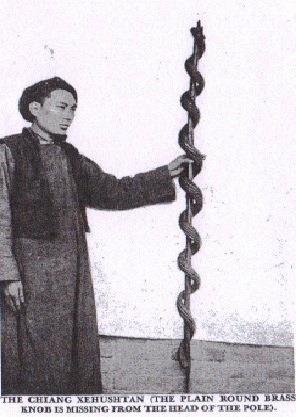
The Ch'iang "Nehushtan": a priest's rod with a serpent wound around it, from Torrance's book.
Torrance says the Ch'iang Min "arrived several hundred years before the time of Christ."15 His son, Thomas F. Torrance, states that "their own chanted sagas and iliads handed down from father to son in their priestly families told of long wanderings through the steppes of Central Asia."16
Kyrgyzstan and the Epic of Manas
Richard Hewitt lived in rural Kyrgyzstan for twenty years, far from the Judeo-Christian world. There he found many striking biblical traditions. A comparison of Kyrgyzstan's national epic, Manas, with the Hebrew Scriptures strengthened the bond. Especially obvious is the similarity between the biblical patriarch "Manasseh son of Jacob" and the Kyrgyz hero "Manas son of Jakyb." Manas also leads an exodus comparable to Moses' exodus; strikingly, both leaders moved their people with 600,000 foot soldiers. His 2012 book, Manas – Lost & Found, covers an unending stream of similarities. Richard Hewitt is a keynote speaker at this first Scientific Symposium, and his papers are available alongside this one. He writes:
"Myths portray lost Israeli tribes in Central Asia. DNA, linguistics, musical, and literary matches also reinforce evidence that 'Manasseh son of Jacob', who left the Near East's slopes 2700 years ago is the same 'Manas son of Jakyb' we see in Kyrgyzstan's national epic."17
The Mizo and Kuki of northeast India: missionaries and local ethnographers
For the Ch'iang Min and the Karen, Israelite customs and traditions were recorded by the missionaries of the day. This was not the case for the Kuki, Chin and Mizo. Two of their own people painstakingly recorded these customs and traditions while the elders still remembered the pre-Christian ways and folklore that preserved them: Dr. Khuplam Milui Lenthang18 for the Kuki and Zaithanchhungi19 for the Mizo. Both have since passed away, Dr. Khuplam in January 2014 and Zaithanchhungi in July 2018. This Scientific Symposium will go a long way toward preserving their legacies.
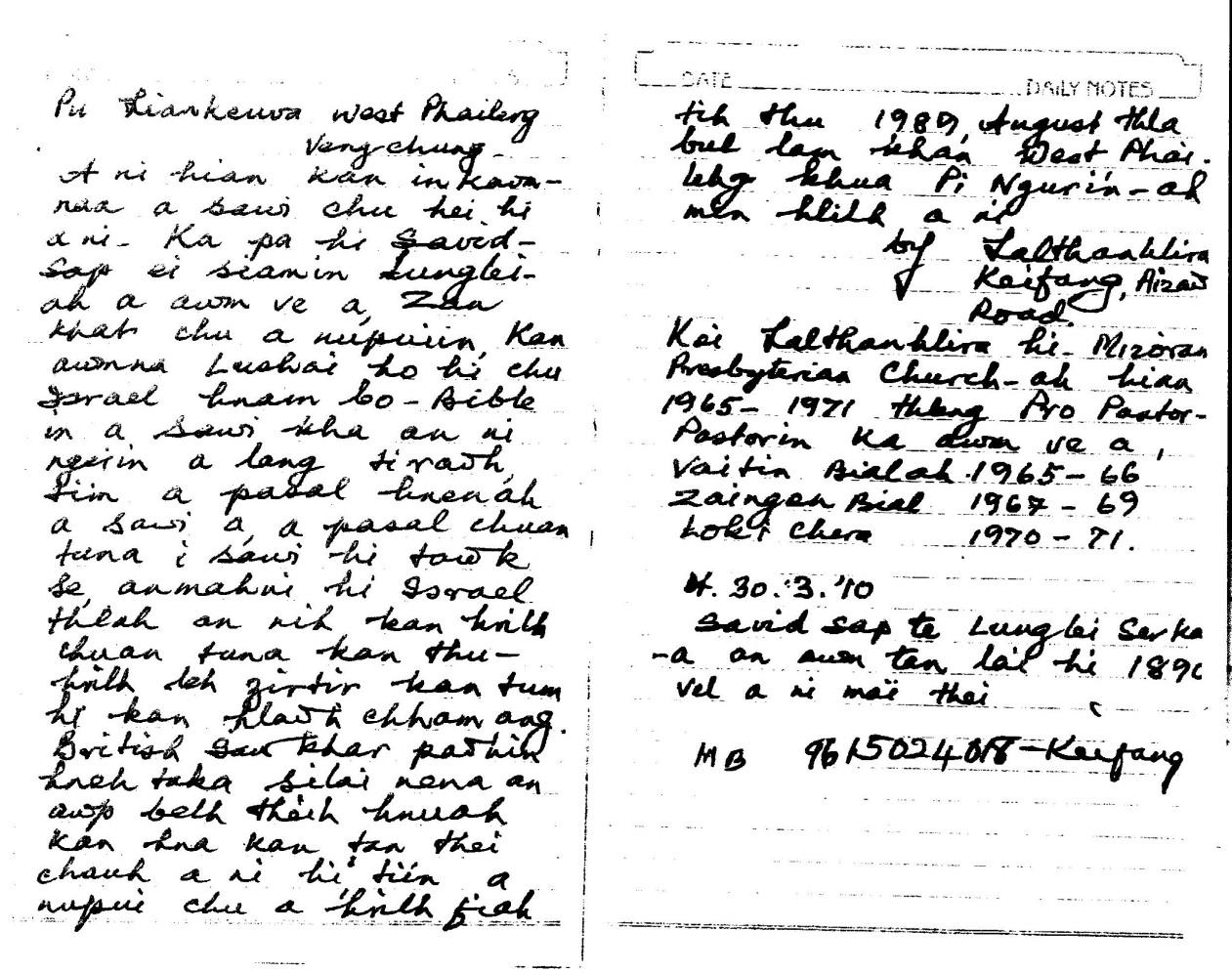
Figure 2. Mizo-language testimony of the son of the cook at Mamit.
It has been supposed that Christian missionaries led the hill tribes to imagine themselves to be the Lost Ten Tribes of Israel. The opposite is actually true. Above is the testimony of the son of a cook who overheard "Sap"20 David and his wife talking about the Mizo as possibly being Lost Tribes of Israel, because of the customs and traditions they were seeing. The wife raised the subject, and the husband told her never to speak of it again. Why he did so is a matter of conjecture, but it certainly goes against the idea that the missionaries encouraged such beliefs.
What appears to be true is that individuals have been inspired by divine revelation on the subject. Their Lost Book stories, the name Manasi and the ease with which they accepted a Jewish Messiah have supported those revelations. The hope of this Symposium is that corroborating evidence will keep building a picture of Israelites in Asia that is more than supposition.
Israelite traditions of the Mizo, Kuki and Chin
The Mizo, Kuki and Chin are branches of the same people, and they connect the hill tribes of Myanmar not only back to China but back to Israel itself. Kuki ethnographer Dr. Khuplam M. Lenthang documents his people as the people of Manmasi. He writes that their themthu and lapi, poems and chants, "are reliable sources concerning our origin and genealogy."21 He spent fifty years collecting these poems and chants and publishing them in English and Kuki so that the history would be preserved. He goes on: "These sources also prove that we once possessed the scroll but later lost it."22
Dr. Khuplam records volumes of these poems and chants. This is one among many:
During the reign of Kutpi maangpa
the Red Sea had gone dried
cloud in the day and fire in the night led the people
many days and many nights together,
like wild animals the water had swallowed
we fetch water that originated from rock (stone)
to satisfy the thirst of the people and their flock.23
No doubt the people of this lost scroll are also people of "The Book." The story of the Israelites is unmistakable in this Kuki poem.
In the 1980s, Zaithanchhungi interviewed thousands of people aged eighty-five to one hundred and four. Contrary to her own belief, the consistent testimony of these tribal elders was that their ancestor's name was Manasi (Menashe). Together with the documented Hebrew-like customs, this led her to believe that the Mizo ancestor was Manasseh, of the famous twelve tribes of Israel.
Lost Book stories: northeast India to Central Asia
Anthropologist Don Richardson documented ten hill-tribe peoples in and around northern Myanmar who have stories of a Lost Book.24 Torrance tells of the Ch'iang Min performing a ritual like the Day of Atonement, and of a priest exclaiming that the Bible was their lost scriptures.25 The Altai of southern Siberia have a lost golden book,26 and the Kyrgyz say the Kitai Khan, the emperor of northern China, burned their book.27
The Karen Lost Book
The Karen version of the Lost Book, according to Reverend Baw Ney,28 goes like this:
After Y'wa created the earth he decided to go on a long journey, and so he called his sons together and gave each a book of life. To the Karen, the eldest, he gave a Golden Book of Life. To the others he gave other books of life, until finally to the white man, the youngest brother, he gave a White Book of Life. The white brother took his White Book of Life and went away to the west, and was never seen again. As long as the Karen read and followed his Golden Book of Life, his life was happy and prosperous.
One day the Karen brother was burning and clearing a field in the forest. He put his Golden Book of Life on a stump in the field while he was doing his work. In his carelessness, the Golden Book of Life was burned, leaving only fragments that he brought back to his house. Gradually the older brother neglected these fragments, until one day they fell through the cracks of the bamboo floor in his house, and the pigs and chickens underneath ate them up. When he no longer had his book of life, his life became more and more wretched with fears, sickness, crop failures, and persecutions from outsiders.29
The Karen brother hoped that someday his white younger brother would come back on the wings of a great white bird floating on the water and bring his White Book of Life to share with his older brother. The Karen waited for him to restore the prosperity that Y'wa had intended for them from the beginning.30
Nine other hill tribes
The Karen are not alone in their Lost Book tradition. Nine other hill tribes in the region have similar oral traditions.31
- Kachin: "The Kachin, like the Karen, believe that Karai Kasang once gave their forefathers a book which they lost." Karai Kasang is their name for a kind supernatural Being "whose shape and form exceeds man's ability to comprehend."32
- Lahu: Their tradition says Gui'Sha, the Creator of all things, gave their ancestors a law written on rice cakes, and during a famine they were forced to eat the rice cakes to survive.33 The Lahu also built "long houses" for the awaited return of the book, which can still be found in their villages today.
- Wa: The Wa await a white brother with their Lost Book.34
- Shan and Palaung: These peoples look to a fifth manifestation of the Buddha, Phra Ariya-Metrai, who was spoken of in their scriptures, which were lost in war in Laos.35
- Kui: Kui tribesmen expected a messenger who would bring their Lost Book back to special places of worship built for that event.36
- Lisu: The Lisu of Yunnan province, China, believe a king of their own will one day rule over them and restore their book in their own language, even though the Lisu had no writing or alphabet.37
- Naga: The Naga consist of twenty-four tribes, and at least one, the Rengma, remembers that "the Supreme Being gave His words to their forefathers by writing them on animal skins. But the forefathers did not take care of the skins. Dogs ate them up!"38
- Mizo: Mizo researcher Zaithanchhungi writes: "According to the oral tradition of Mizo, the leather scrolls in which all ancestral history of the tribes and families were written, were lost due to continuous slavery. The leather Scrolls in which they had written about their origins, family histories and narratives of their travels were said to have been left behind in their labour camps when they fled China. According to another legend of the Mizo, the leather Scrolls were eaten by a dog of the keeper of the Scrolls."
Dr. Khuplam Milui Lenthang records this Kuki-Chin-Mizo themthu (song) about crossing the Jordan River:
I crossed the river with a narrow passed
Be united and strong like a refined iron and
Carry it like a trophy with great joy and pride
We could not be popular since we have so many enemies
I fought many battles and wars continuously
We are the children of Manmasu
Aboriyah.39
Lenthang also writes that two missionary couples during British rule were amazed by the similarities between Kuki-Chin-Mizo culture and customs and those of biblical Israel. Although the people had lost their scroll, they had developed games that helped keep these customs and culture alive.40
The burning of the books: China, 213 BC
Zaithanchhungi offers this explanation. In 213 BC, the Emperor Shih Huang Ti burned all books except those on agriculture and medicine in his drive to unify China. He also relocated people en masse41 to remove every philosophy other than his own, known as Legalism. He may have been given the insulting title of "dog," and so over time the emperor who burned their books may have become the "dog" who destroyed their books, and eventually the dog who ate their scroll.42
Britannica says of Shih Huang Ti:
"As emperor he initiated a series of reforms aimed at establishing a fully centralized administration, thus avoiding the rise of independent satrapies. Construction of a network of roads and canals was begun, and fortresses erected for defence against barbarian invasions from the north were linked to form the Great Wall."43
Britannica continues:
"Confucian scholars strongly condemned Shihuangdi and it is said that 460 of them were executed for their opposition. The continuous controversy between the emperor and Confucian scholars who advocated a return to the old feudal order culminated in the famous burning of the books of 213, when, at Li Si's suggestion, all books not dealing with agriculture, medicine, or prognostication were burned, except historical records of Qin and books in the imperial library."44
We need to ask whether this book burning etched itself into the collective memory of the Peoples of the Lost Book and was passed down through oral tradition.
Kyrgyzstan and its Lost Book
West of China, across the Taklamakan Desert, another people have a legend that confirms the legends of the Kuki, Chin and Mizo clans of northeast India: the Kyrgyz. Richard Hewitt writes that Ashim Jakypbek's version, Tengiri Manas, notes that Kitai leaders burned Kyrgyz scrolls:
"When the Kitai, who say, 'We are the only ones in this world who have knowledge,' robbed the sacred fort and burned sacred writings from the treasury, they said, 'May the darkness that has fallen on the Kyrgyz also come on their minds, so they might not know another writing.'"45
Do the Mizo memory of a lost book and the Karen story of a burned book point to the same event, the book burning of 213 BC? And does that connect to the burned sacred writings in the Kyrgyz Epic of Manas quoted above? Does the loss of this important book explain the epics of the Kyrgyz and the poems and stories of the Manmasi46 of northeast India?
The Altai and their Golden Book
North of the Kyrgyz, the Altai have a legend of a Golden Book, just like the Karen. The Altai Golden Book is kept in a golden chest, reminiscent of the golden Ark of the Bible. In their version, the golden chest falls into the water while the people are crossing a river. They take out the golden book to dry its pages, a cow eats them, and the book is lost.47
The Q'iang Min and their lost scriptures
In 1925, Rev. Thomas T. Torrance found a Q'iang priest performing a ritual that resembled Yom Kippur, the Day of Atonement of the children of Israel in the Torah. His son, Thomas F. Torrance, wrote in the foreword to the 1988 second edition of his father's book:48
"In 1925 I had the privilege of being present at the village of Oir, some ten thousand feet above sea level, situated in a lateral valley behind Weichou, when a venerable Chiang priest revealed to my father for the first time the full rite of the Day of Atonement in the Chiang liturgical year. When my father read to him the sixteenth chapter of the book of Leviticus, the priest leapt off his seat in excitement, exclaiming that these were the lost Chiang Scriptures."49
This priest went on to identify himself and his family with the people of the Book that Torrance was reading from. So are the Peoples of the Lost Book one and the same as the people of the Book we know as the Bible?
Cave dwellers: the Lushai tribes of northeast India and Burma
One of the names the Mizo call themselves is Chhinlung, which means "cave dwellers." Zaithanchhungi writes in Israel-Mizo Identity:
"Although no one can take it for certain, Chhinlung is claimed by all Mizos to be the original source of their existence. There is a township called Sinlung in Szechuan Province in Central China. It can be seen on a map at 10 degrees 3 minutes North and 31 degrees East."
Divine providence
My story is available in Mizo for this first Scientific Symposium on the Interconnectedness of Israelites in Asia. Most of the events recorded there could not have happened without the guiding hand of a higher power. The Living God seems to want these truths and histories to surface at this time.
In 2016 I took Zaithanchhungi and her daughter, Lalremruati, to Chengdu in the hope that someone could take us to meet the Ch'iang Min. Friends from Australia came to meet us, and they had Esther Chen's number. She agreed to take us up the mountains to Ch'iang Min villages such as Taoping, and to the two relevant museums. As if by appointment, she was hosting a "Lost Tribes of Israel in China" conference while we were there, and at the conference we met Damin Wu. He had been hoping to go to Mizoram for Lost Tribes research and was overjoyed to meet Zaithanchhungi in Chengdu. She told him about the village of Chhinlung, or Sinlung, that she had read about.
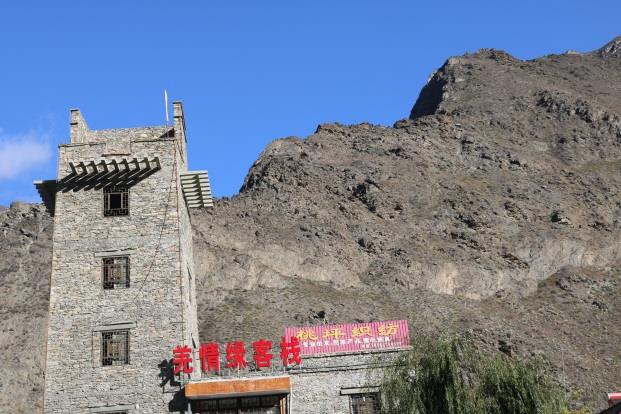
Figure 3. Taoping, a Ch'iang Min village in Sichuan.
Mizo memories of Sinlung or Chhinlung
Zaithanchhungi writes:
"Probably the Mizo forefathers lived in this place but had to leave it because of enemies as suggested by one of their folk songs.
'Strange are the faces and no friends they are,
I had to leave Sinlung my home.'Another one says:
'The famous Sinlung is my home,
The land of my father and mother;
To call it back if were possible,
The land of my father and mother.'The first one suggested that they had to leave because of enemies and the second one suggested their longings for that Sinlung home."50
A Kuki Manmasi chant
We the Manmasi are leaving the cave (Khul),
Now the migrating people,
Forward on towards Chungkhopi!51
A prince called Chinlung
Around AD 820 there was a Chinese prince called Chinlung, and the Mizo may have been among his many subjects. At about the same time, Buddhism spread east to Burma, Siam, Malaysia, China and Japan, and it remained the established religion in these places. Because of the spread of Buddhism, the Israelites moved to safer places around Chengdu, west of Chongqing. Some of these towns are called Lushien and Loshan, and it is not improbable that the Lushei of the Mizo came from these places. These people were then cave dwellers.52
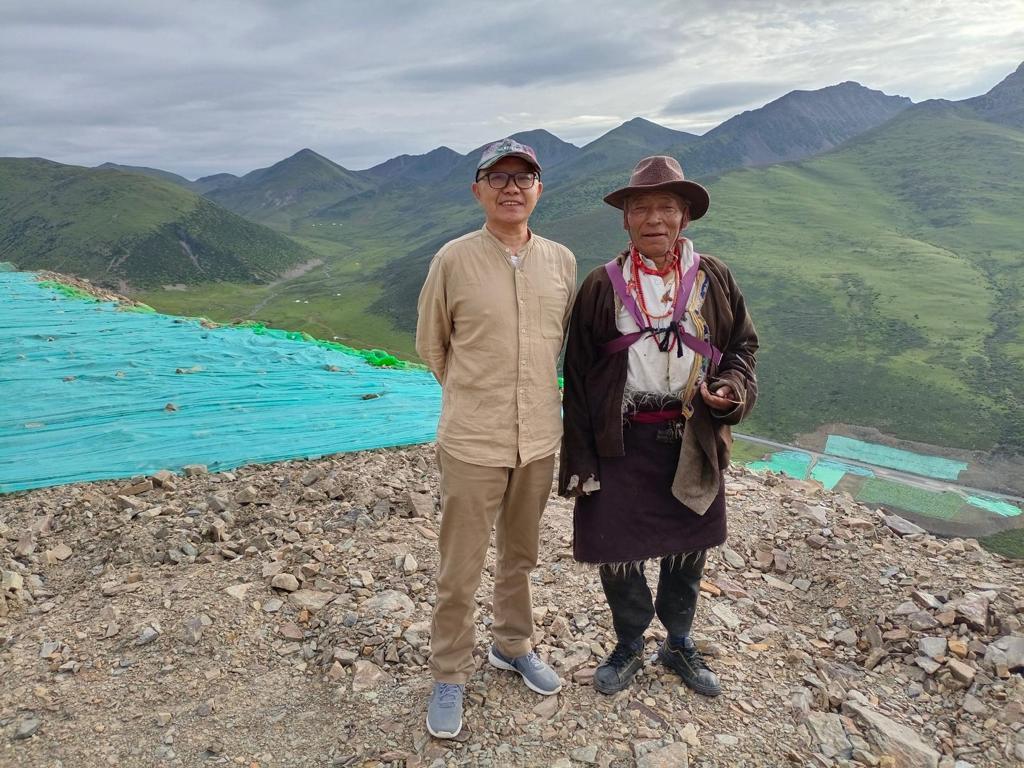
Figure 4. A Xinlong villager (right). Notice the steep hills in the background, which look like the Lushai Hills.
Xinlong, west of Chengdu, and its caves
Since 2016, Damin Wu has been to this village twice. It is spelled Xinlong on Google Maps and lies in the Garzê Tibetan Autonomous Prefecture of Sichuan, China. On his first visit he found people who looked like Mizos, a Q'iang Min area called Xinlong, and many caves that people had lived in hundreds of years ago.

Figure 5. A villager from Xinlong, 2021.
So let us return to China as the migration path of these Peoples of the Lost Book. In her book The Hidden Qiang, "Sons of Sheep," Esther Chen argues that wave after wave of tribes came into China from Central Asia and beyond, tribes she considers largely Israelite under many different names, and that most of them assimilated into the wider Chinese population. But, she says, a select group of priestly families moved into the mountains of southwestern China to preserve their customs, so that their traditions and history would not be lost.53
The Chhinlung cave-dwelling evidence that Damin Wu found supports the view that the Mizo came from this region and these people, and so strengthens their claim to be Lost Tribes of Israel, specifically Manasseh.
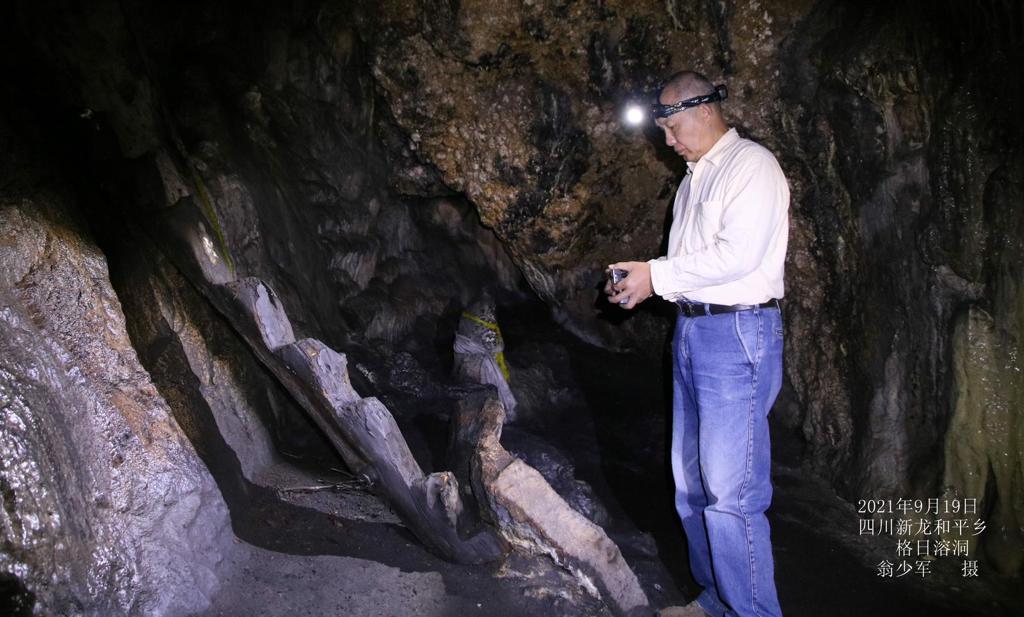
Figure 6. A cave near Xinlong where people lived hundreds of years ago.
Manas, Manasi, Manmasi and the tribe of Manasseh
The name most often associated with these Israelite peoples is a form of Manasseh, the son of Joseph and one of the twelve tribes of Israel (one of the two sons Jacob adopted). Manas, Manmasi and Menashe are names that connect many of these peoples from Central Asia to northeast India. We have Manas of the Kyrgyz, the Altai and Inner Mongolia; the Manasi or Menashe of the Mizo; and the Manmasi of the Kuki. The Manchu people of China's last dynasty also appear to be named after Manasseh.
Manas of Kyrgyzstan
The Epic of Manas tells the story of Manas, his descendants and their battles against various enemies; some versions run to about 500,000 lines.54 Richard Hewitt lived in rural Kyrgyzstan for twenty years and found hundreds of biblical parallels in the lines of this chanted epic while sipping warm horse milk with shepherds in their yurts. Manas is always the hero. One day an old shepherd leaned forward, looked him in the eye and said, "Do you want to know the name of Manas' father?" When Richard said yes, the shepherd replied, "Jakyb." It was then that Richard realized that Manas son of Jakyb was the same as Manasseh son of Jacob, one of the mythical "Lost Ten Tribes."
The Kyrgyz epic says that some of Jakyb's relatives were scattered to Manchuria and others to places "beyond Tibet":
"Journeying in their places
The field of Manchuria,
On the other side of Tibet,
Not the slightest is heard from them."55
The Kuki sing about a time when the Kitai separated them from their brothers on the Samakai Mountains:
"Oh my clansmen, that we have been torn
Upon the big Samakai Range
My sadness spreads from north to south.
Like the water that is flowing, I move on."56
North of Assam, which is "the other side of Tibet" from the Kyrgyz, lies the Manas River, surrounded by Manas National Park.
Zaithanchhungi on Manasi in Mizo and Lushai tradition
The name Manasia or Manase is often cited in chants used in sacrifices and other sacred matters:57
- At a family offering: "The children of Manase offer Thee animal's blood, O God of High."
- For someone who falls sick at the jhum (hill field): "If tied, untie him; if manacled, unlock him; we are taking Manase home."
- At the sacrifice for epilepsy: "Release him, we are above your power, we are children of Manase."
- On choosing a paddy field with something taboo: "Go away, go away, we are bringing Manase here."
- On felling the first tree when clearing for a house: "You are obstructing our grandfather Manasia."
- In oral history: "Whenever you pray to God, the name of our forefather Manasia must be pronounced."
- At every sacrifice for sin, the priest chants: "God of heaven and of the earth, we, sons of Manasia, who are on earth are offering the heart, the liver of the animal for forgiveness of our sins."
Manmasi and The Wonderful Genealogical Tales of the Kuki-Chin-Mizo
Dr. Khuplam devotes his entire book to the relationship between Manmasi and the Israelite poems and chants of the Kuki, Chin and Mizo. Here is one of many examples, a themthu (song) on the journey of the Manmasi people to reach their destination safely:
He He He Yah!
Oh, the faith of our forefathers
For the fame of the Themthu-lhun bom
Like a war trophy of the enemy's heads at the Khomol
We carry in our chest to the four corners
We gather the stones of the river bed and walk across
We worship God of our forefathers with this blood of goat in the seven bamboo vases.
Let wellness and good health always be with the children of Manmasi your creation.
Aboriyah!58
The Manchu and the people of southern China
Howard Ha-Sung Chung, another keynote speaker at this symposium, has done extensive research on the waves of Israelites flowing into and out of China. The subject is too detailed to do justice to here, so I refer the reader to his book.59 He argues that Manchu was not a place name but a tribal name. The Manchu lived among the former Jachinites and Hebrews, so "Manchu" may be a phonetic rendering of an Israelite tribe; Manasseh comes to mind.60 He also notes that the Yuezhi and Alans of Central Asia were called "Wen-na-sha" in Chinese literature; allowing for the shift from M to W, this gives the name Manasseh.61
The half-tribe of Manasseh
Remember that this tribe was so large by the time it reached the Promised Land of Canaan that it split in two. Half stayed on the east side of the Jordan, where the land was good for raising animals. Moses allowed this as long as they helped their brothers fight in Canaan. They were good fighters. Years later, along with two other tribes, they were taken captive in 740 BC and relocated to the northeastern border of what would later become the Persian Empire. Steven M. Collins told me that they became Persia's border guards in this area and went their own way when the Persian Empire fell. The Greek historian Herodotus calls them the Massagetae.62 Alexander the Great fought them, and many fled into Central Asia afterward. Many Central Asian countries tell the story of their warrior queen Tomyris defeating King Cyrus. Saka is an earlier name of the Israelites, from around the 8th century BC,63 and many historians write about the Saka and their exploits in Central Asia.
The big wall
The Mizo remember escaping through a hole they dug in a big wall.64 It appears that many peoples were enslaved in China to build the Great Wall and many others like it.
The Kyrgyz Manas Epic also mentions a big wall. The story goes: "Jakyb's brother, Bai, from the other side of the Himalayas, was trying to visit Jakyb. He got caught en route and was enslaved to build the wall. He was old and lay in the ditch with dead captives and workers. When the guards left, he fled."65
Language
In 2019 I took three Mizos to the World Epic Festival in Bishkek. While getting ready to be interviewed, the Mizos heard two Kyrgyz speak a very familiar phrase: "tok to, tok to," meaning "stop fussing." The sound and intonation were the same as the Mizo phrase with the same meaning, "tawk tawh, tawk tawh."66 Surely the Mizo and the Kyrgyz were once one and the same people.
Richard Hewitt records some Kuki–Kyrgyz word similarities from an interview with Tsvi Khaute in Jerusalem in 2005:67
- Kut: an object of blessing (Kyrgyz); a day of celebration (Kuki)
- Mizam: law or commandment (Kyrgyz)
- Bulpizam: ancient writing (Kyrgyz); the Torah or original book (Kuki)
A comparative linguistic study of the Kyrgyz and Kuki/Mizo languages is needed.
Conclusion
These examples of peoples with a "lost book" legend, from Kyrgyzstan through China to northeast India, show an overwhelming need for further research. Not only do we have these peoples remembering their Lost Book, and the peoples at either end of the route, in Kyrgyzstan and northeast India, carrying a similar name for their ancestor (Manas, Manasi, Manmasi), but we also have remarkable timing: the Karen date themselves from the same year that the half-tribe of Manasseh and two other tribes of Israel were taken captive and relocated somewhere east of Persia. We also have the Kuki memory, in poem form, of crossing the Red Sea; the Q'iang Min of Sichuan, China, performing Yom Kippur rituals; and the many references to the biblical patriarchs in The Epic of Manas, as Richard Hewitt has documented here and in his books. Surely the legend of the Peoples of the Lost Book must have some connection to the people of "The Book." This Scientific Symposium may well be the key to unlocking more of these truths, and so to building a fuller picture of where and who the Lost Tribes of Israel are in the eastern hemisphere.
Appendix I
Prof. C. A. L. Totten of Yale University says:
"I can never be too thankful to the Almighty that in my youth he used the late Professor Wilson to show me the difference between the two houses. The very understanding of the KEY by which almost the entire Bible becomes intelligible, and I cannot state too strongly that the man who has not yet seen that Israel of the Scripture is totally distinct from the Jewish people, is yet in the very infancy, the mere alphabet, of Biblical study, and that to this day the meaning of seven-eighths of the Bible is shut to his understanding."68
Appendix II
From George Moore, M.D., The Lost Tribes and the Saxons of the East and of the West, chapter XVIII, "The Karens and Their Traditions," pages 368–369:
They praise their Maker in these words:—
"He was in the beginning of the world;
God is endless and eternal;
He was in the beginning of the world;
God is unchangeable and eternal:
He existed in ancient time at the beginning."Now, remembering that they call the Creator Yoowah or Yoovah, we cannot avoid connecting this hymn in praise of his power with the words of the seer, who, with the sublimity of simple truth, lays the foundation of all faith in the grand words — "In the beginning God created the heavens and the earth."
But the original of the Karen thought is more plainly manifest in the following passages of tradition obtained by Mr. Wade, a missionary, from a Moulmain Karen, who had no knowledge beyond what he acquired amongst his own people:—
"God created heaven and earth. The creation of heaven and earth was finished. He created again, creating man. At first he created earth, and then he created man. The creation of man was finished. He created woman. He took a rib out of man, and created again, creating woman. The creation of woman was finished. He created again, creating life. Father God said I love my son and my daughter, I will give them my great life. He breathed a little of his life into the nostrils of the two; they came to life, and became real human."
Page 372:
The coming of the Karen king, bringing the holy mountain, is associated with the expectation of blessedness to all nations, as in Isaiah. … That the Karens did not derive their ideas from a Christian source is evident from the fact that they are not trusting to a Saviour that has come, but that is coming.
Appendix III
"The Karen reckon 2010 to be their year 2749. This means that they look to BC 739 as the year of their founding. In their legends Karen speak of coming from the land of 'Thibi Kawbi' which some have thought may indicate Tibet and the Gobi desert. Some Karen oral traditions refer to crossing a river of 'running sand' as an important event in their history. There are Chinese sources which refer to the Gobi Desert as the 'river of sand,' and it is probable that the Karen originated in an area bordering Tibet. They crossed the Gobi Desert into China, and gradually made their way into the mountainous areas of Burma."69
Bibliography
- Avichail, Rabbi Eliyahu. The Tribes of Israel. Amishav, Jerusalem, 5765.
- Chen, Esther. The Hidden Qiang, "Sons of Sheep." Sichuan, China, 2012.
- Chung, (Howard) Ha-Sung. Dispersion of the Israelites in the Eurasian Continent. Independently published.
- Collins, Steven M. Israel's Lost Empires. Bible Blessings, Royal Oak, MI, 2004.
- Collins, Steven M. Parthia: The Forgotten Ancient Superpower and Its Role in Biblical History. Bible Blessings, Royal Oak, MI, 2004.
- Gawler, Col. J. C. Our Scythian Ancestors Identified with Israel.
- Grant, Asahel. The Nestorians, or the Lost Tribes. John Murray, London, 1841.
- Halkin, Hillel. Across the Sabbath River. Houghton Mifflin, New York, 2002.
- Lendering, Jona. Alexander the Great: The Demise of the Persian Empire (340–320 BC). Athenaeum–Polak & Van Gennep, Amsterdam, 2004.
- Lenthang, Dr. Khuplam Milui. The Wonderful Genealogical Tales of Manmasi (Kuki-Chin-Mizo). Maxford Books, Delhi, 2013.
- Mallory, J. P., and Victor H. Mair. The Tarim Mummies: Ancient China and the Mystery of the Earliest Peoples from the West. Thames & Hudson, 2000.
- Moore, George, M.D. The Lost Tribes and the Saxons of the East and of the West, with New Views of Buddhism, and Translations of Rock-Records in India. Longmans, Green, Longman, and Roberts, 1861.
- Richardson, Don. Eternity in Their Hearts. 3rd ed. Regal Books, Ventura, CA, 2005.
- Risbek (Hewitt, Richard). Manas – Lost & Found: A Bridge Linking Kyrgyzstan's Epic to Ancient Oracles. Risbek, California, 2012.
- Shachan, Dr. Avigdor. In the Footsteps of the Ten Lost Tribes. CreateSpace, 2007. Translated from the Hebrew Towards the Sambatyon River: A Journey in the Footsteps of the Ten Tribes, Hakibbutz Hameuchad, Tel Aviv, 2003.
- Torrance, Rev. Thomas T. China's First Missionaries: Ancient Israelites. 2nd ed. Daniel Shaw Co., Chicago, 1988.
- Zaithanchhungi. Israel-Mizo Identity. Hope Lodge, Aizawl, 2008 (English).
- Zaithanchhungi. Israel-Mizo Identity. Hope Lodge, Aizawl, 2018 (Mizo).
Notes
-
Avigdor Shachan, In the Footsteps of the Lost Ten Tribes, p. 121, n. 13. ↩
-
The Jewish Quarterly Review, Vol. 1, No. 3 (April 1889), pp. 185–201, University of Pennsylvania Press. http://www.jstor.org/stable/1450216 (accessed August 19, 2016). ↩
-
Thomas T. Torrance, China's First Missionaries: Ancient Israelites (1937), p. 8. ↩
-
"Jews" here is again a misnaming of all Israelites. ↩
-
The Yuezhi and Alans of Central Asia were called "Wen-na-sha" in Chinese literature. Allowing for the shift from M to W, this gives the name Manasseh. Ha-Sung Chung, Dispersion of the Israelites in the Eurasian Continent, p. 117. ↩
-
J. H. Allen, Judah's Sceptre and Joseph's Birthright (1902), chapter VI. See Appendix I for the full quote from Prof. C. A. L. Totten of Yale University. ↩
-
Founder of Amishav, a Jewish organization searching for the "Ten Lost Tribes." ↩
-
John Trew, "Journey from Rangoon to Toungoo, and Six Weeks in the Toungoo Mountains of Burma," Mission Life, Vol. V (1874), pp. 563–578 (Project Canterbury). http://anglicanhistory.org/asia/burma/trew_six1874.html ↩
-
http://www.infomekong.com/peoples/karen/ (accessed August 14, 2014). See Appendix III. ↩
-
Numbers 32: a land fit for many people and livestock. ↩
-
Trew, Mission Life, Vol. V (1874), pp. 564–565. ↩
-
Torrance, p. 8, citing Modern Missions, p. 90. ↩
-
George Moore, The Lost Tribes and the Saxons of the East and of the West (1861), chapter XVIII, p. 372. https://archive.org/details/losttribessaxons00moor ↩
-
Torrance, 2nd ed. (1988), p. iv. ↩
-
Ibid., p. 7. ↩
-
Ibid., p. ii. ↩
-
Richard Hewitt (Risbek), Manas – Lost & Found, p. 153. ↩
-
Dr. Khuplam Milui Lenthang, The Wonderful Genealogical Tales of Manmasi (Kuki-Chin-Mizo) (2013), English. ↩
-
Zaithanchhungi, Israel-Mizo Identity (2008), English edition. ↩
-
Sap means a white person. ↩
-
Lenthang, p. 163. ↩
-
Ibid. ↩
-
Ibid., Appendix II, p. i. ↩
-
Don Richardson, Eternity in Their Hearts, chapter 2. ↩
-
Torrance, p. vi. ↩
-
Brontoi Yangovich Bedyurov, Chairman of the International Association of the Altaian Peoples, author and Soviet award recipient, speaking at the WEF Scientific Symposium, Bishkek, Kyrgyzstan, June 28, 2019. ↩
-
Hewitt, Manas – Lost & Found, p. 126. ↩
-
Reverend Baw Ney was the founder of the village of Tee Mae Ker Lah, Thailand. ↩
-
http://www.stolaf.edu/people/leming/film.htm#Scene3 (accessed August 14, 2014). ↩
-
Ibid. ↩
-
Richardson, Eternity in Their Hearts, chapter 2, "Peoples of the Lost Book," 3rd ed. (2005). ↩
-
Richardson, p. 76. ↩
-
Richardson, p. 77. ↩
-
Richardson, p. 78. ↩
-
Richardson, p. 79. ↩
-
Richardson, p. 80. ↩
-
Ibid. ↩
-
Ibid.; Tegenfeldt, A Century of Growth, p. 46. ↩
-
Lenthang, "Briefing notes on Manmasi identity," p. ii (before p. 299). ↩
-
Lenthang, p. 164. ↩
-
Just as the Assyrians had done half a millennium earlier, in a past homeland. ↩
-
Zaithanchhungi, Israel-Mizo Identity, pp. 18–19. ↩
-
https://www.britannica.com/biography/Shihuangdi (accessed April 24, 2019). ↩
-
Ibid. ↩
-
Hewitt, Manas – Lost & Found, p. 126. ↩
-
Manmasi is the ancient name of the ancestor of the Kuki of Manipur, northeast India. ↩
-
Bedyurov, WEF Scientific Symposium, Bishkek, June 28, 2019. ↩
-
Torrance, 1st ed. (London, 1937). ↩
-
Ibid., p. vi. (Q'iang and Ch'iang are used interchangeably.) ↩
-
Zaithanchhungi, Israel-Mizo Identity, p. 15. ↩
-
Lenthang, pp. 38, 153 and 227. ↩
-
Zaithanchhungi, Israel-Mizo Identity, pp. 15–16. ↩
-
Esther Chen, The Hidden Qiang, "Sons of Sheep"; also an interview with the author, November 2016. ↩
-
https://en.wikipedia.org/wiki/Epic_of_Manas (accessed November 6, 2023). ↩
-
Richard Hewitt's translation of Sagymbai Orozbakov, Manas: Kyrgyz People's Heroic Epic, Vol. 1, lines 1266–1270 (Manas – Lost & Found, p. 162). ↩
-
Hillel Halkin, Across the Sabbath River, p. 272. ↩
-
Zaithanchhungi, Israel-Mizo Identity, pp. 42–43. ↩
-
Lenthang, p. 179. ↩
-
Ha-Sung Chung, Dispersion of the Israelites in the Eurasian Continent. ↩
-
Ibid., p. 373. ↩
-
Ibid., p. 117. ↩
-
The Massagetae, also called Sakā tigraxaudā, the Old Persian name meaning "wearers of pointed hats." These Saka with pointed hats are the Israelite captives shown on the Behistun Stone. ↩
-
Steven M. Collins, Israel's Lost Empires, chapter 4. ↩
-
From many conversations with local people and with Zaithanchhungi while the author lived in Mizoram, 2009–2019. ↩
-
Richard Hewitt, from memory. ↩
-
Michelle Varte and Charlee of Heritage Textiles were being interviewed by Sharbek and Jonabek in Bishkek, Kyrgyzstan, in July 2019. ↩
-
Hewitt, Manas – Lost & Found, p. 166. ↩
-
J. H. Allen, Judah's Sceptre and Joseph's Birthright (1902), chapter VI. ↩
-
http://www.infomekong.com/peoples/karen/ (accessed August 14, 2014). ↩